
Strong Finish to the 2025 Wool Selling Season
Ulster Wool members will be aware that wool returns this year are at their highest level for a decade. The final auction of the 2025 season delivered a strong finish, with increased competition pushing prices higher across most core wool types.
From the outset, demand was firm, with both UK processors and export buyers actively competing for supplies. This competitive bidding helped drive prices up by 10% for most core types compared to the previous sale, reflecting continued confidence in the market.
Prices Rise Across All Core Wool Types
All core grades recorded gains, and clearance was high at 99%, with just four small speciality lots remaining unsold. Buyers purchased 1,055 tonnes from an offering of 1,065 tonnes.
The average greasy price at the auction increased to £1.85 per kg, up 10% on the previous sale.
Organic-certified wool once again attracted a notable premium, underlining continued strong demand for certified product in key markets.
Improved Outlook for Member Returns
Andrew Hogley, CEO, said:
“Encouragingly, the strong results from the final two sales of the 2025 season have significantly improved the outlook for member returns in 2026. If current market levels are maintained, returns are now expected to be notably higher than the projections issued earlier this year.”
Focus Turns to the 2026 Season
With less than 280 tonnes of the 2025 clip remaining to sell, attention now turns to the 2026 season. The first sale is scheduled for 21 July, when the remaining carryover wool will be offered alongside early-season intake.
Shearing has been slower to get underway this year due to cold and wet weather in May, and as a result, the July sale is expected to offer around 1,000 tonnes.
Deliver Your Wool and Benefit from Improved Prices
Andrew concluded:
“I would encourage members to contact their local depot or nearest collection centre to arrange delivery of their wool, so they can benefit from these improved prices. For any sheep farmers who have not marketed through Ulster Wool in recent years and are interested in collectively marketing their wool in 2026, we would welcome them to get in touch.”
The 2026 wool season is officially underway, and our depots are now open and ready to receive your wool.
Whether you’re delivering directly to a local collection site or arranging a farm pickup, our nationwide network is designed to make the process simple, efficient, and convenient for every producer across Northern Ireland.
A Nationwide Collection Network Built Around Farmers
With one of the most comprehensive wool collection systems in the country, we continue to make delivery easier than ever.
Our 2026 Collection Network Includes:
- 1 grading depot
- 25 collection sites
- 90% of collection points within a one-hour drive
- A trusted network of depots, drop-off locations, and hauliers
Free Collection Available
To make delivery even more cost-effective, we offer free haulage collection when neighbouring farmers work together.
We offer free collection when neighbouring farmers combine 50 wool sheets (3 tonnes) in one location.
Get in touch with your local depot and book your collection directly.
By combining loads, farmers reduce transport costs and support a more sustainable and efficient collection process.
Why Early Delivery Matters
We strongly encourage producers to send wool as soon as they shear it.
Delaying delivery can expose wool to:
- Damp conditions
- Contamination
- Damage during storage
These factors reduce the overall value and quality of your clip.
Prompt delivery preserves wool quality and keeps processing running smoothly throughout the season.
What Happens After Delivery?
Once your wool arrives at one of our depots, our team professionally grades it.
Our graders carefully assess individual clips and combine them into commercially graded lots before auction.
This sales process gives UK producers stronger market access and improves efficiency across the supply chain.
Preparing Your Wool for Collection
Pack Wool Sheets Properly
To improve transport and depot operations:
- Fill wool sheets to full capacity wherever possible
- Correctly packed sheets should weigh approximately 80kg
- Weight may vary depending on wool type
Well-packed sheets reduce transport costs and improve handling efficiency across the network.
Use Official Wool Sheets
Please use official Ulster Wool sheets for every delivery.
Your local depot will distribute sheets before the season begins. If you need additional sheets, contact your depot directly.
Labelling Requirements
Clearly label every wool sheet to support accurate identification and payment processing.
Include the following information on each sheet:
- Member name
- Address
- Seven-digit registration number
For better security and traceability:
- Attach one label to the outside of the sheet
- Place another label inside the sheet
Incorrect labelling can delay payment processing and create identification issues.
Using a Haulier?
If you arrange transport through a haulier, please complete all paperwork fully and accurately before collection.
Clear documentation avoids delays and helps us process your wool efficiently.
Faster Payments with QR Code Check-In
Following the successful introduction of QR code technology at collection centres, you can now confirm wool drop-offs quickly using your smartphone.
Simply scan the QR code at your collection centre and complete the short form to confirm your delivery. This allows us to process your wool faster and release payment more efficiently.
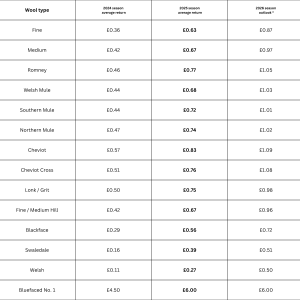
We have confirmed that member returns for the 2025 clip year will reach their highest level in ten years. Average returns per kilogram are 70% higher than last year, with prices increasing across all wool types.
Stronger Returns for the 2025 Clip Year
Returns for our members have increased across all wool types, with the average payment at 68p per kilogram compared with 40p a year ago. Cheviot wool is returning 85p per kilogram, while many core grades of Mule, Texel, Romney, Hill and Cheviot Cross are paying between 70p and 75p per kilogram.
Positive Outlook Beyond the 2025 Clip Year
We are also optimistic about the outlook for the 2026 wool season. Strong price gains at recent auctions over the past few months indicate that returns for the 2026 clip could increase by a further 25p to 30p per kilogram. Several core types could potentially return more than £1 per kilogram to members.
Why 2025 Clip Year Prices Are Rising
These figures reflect strong market demand and increased competition at the auctions, where multiple buyers are actively competing. This highlights the importance of the auction system. As the only marketplace where multiple domestic and export buyers compete directly, the auction system helps drive prices for all Northern Ireland sheep farmers.
Collective Selling Supports the 2025 Clip Year
With around 3,000 sheep farmers working together through us, the strength of collective selling continues to play a central role in securing improved returns for wool. Higher volumes not only strengthen auction competition but also reduce our operating costs per kilogram, benefiting all members.
Growing Demand After the 2025 Clip Year
Demand is also being driven through supply chain development and marketing initiatives. Our partner, British Wool, now works with more than 180 licensees, while consumer awareness continues to grow. Sales of fully traceable wool have increased again over the last year, with buyers paying a premium above auction prices.
Recent initiatives include new yarn and fabric collections and a retail collaboration with Shaun the Sheep.
Investing Beyond the 2025 Clip Year
Alongside improved prices, we continue to invest in activities that support long-term demand and value. Several shearing and wool handling courses are scheduled for 2026, helping ensure clips are presented to the highest possible standard.
Chairman’s Comment on the 2025 Clip Year
Commenting on the announcement, Chairman Brendan Kelly said:
“This is a strong result for our members and a clear sign the market is moving in the right direction. Prices are up across all wool types because there is real competition at auction, and that only happens when farmers sell together through us.
The auction is where prices are made. The more wool that comes through us, the stronger the returns will be for everyone. This is exactly what collective selling is designed to do, as we saw in 2021 after the Covid pandemic, working together to strengthen the market, deliver better value for wool produced in Northern Ireland, and maximise returns to our members.”
We caught up with Stephen at our Muckamore depot to find out what actually happens when the wool depot shifts into “maintenance mode” each April.
Spoiler: it’s a busy month!
Getting Ready for Members
Stephen explains, “In April, once we grade all the wool, we carry out general maintenance across the depot. We clean and check all machinery, and clean and weigh every skep. It important to also refresh the floor paint for walkways and skep lines, and, if time allows, we repaint the canteen and offices.”
With about eight weeks to cover the whole network, he says, “All tasks are complete before the new season begins.”
Servicing Machinery and Safety Checks
Maintenance mode isn’t just about bags. Stepen shows us around the depot: “Its essential maintenance at this time to keep operations running efficiently during the season.We thoroughly service and check both the packing machine and the core testing machine. The packing machine runs 39 hours per week, so we must keep it in full working order at all times.As a small depot, we rely on just one of each machine. The two forklift trucks are serviced every six months, as we use them heavily and depend on them daily.”
All lifting equipment also gets independently inspected every 6–12 months, and operators do daily pre-use checks to catch any issues early. Stephen adds, “Any breakdown affects the entire operation”
Can You Deliver Wool During Maintenance?
We asked Stephen if farmers can still drop off wool: “Wool is accepted all year round, although we set a cut-off point in mid-March so we can grade all wool by the end of March. We include all wool delivered before this point in the current season. Any wool delivered after this into the stack and inform the farmer that it will be added it to the system at the beginning of May. In most years, we receive between 5–10 tons during this period.We pack everything up in the last week of March.”
So if you’re worried about late deliveries, don’t be – your local depot has you covered.
What Happens When We “Pack Up”?
Stephen explains packing up at the end of the grading season: “When we pack everything up, we often still have wool in skeps that does not reach bale weight. Following instructions from Richard Alderson (Wool Sales), we combine the remaining grades into suitable lots. Then we core-test all lots and upload them to the wool system. Wool Sales selects the lots they need for upcoming auctions.
Why Pre-Season Maintenance Matters
“We carry out safety checks on all machinery and lifting equipment during April. Before each day’s use, we inspect every machine and record any defects, then fix them immediately.” Stephen says. “An insurance company visits the depot to complete six-monthly and annual inspections on all lifting equipment, including forklift trucks, hoists, fall arrest systems, and skep elevators. We also work closely with Colin Jarvis, the Health and Safety Manager for all grading and intermediate depots, to ensure we meet all regulations.”
Closing Sale Lots
Before the new season starts, Stephen tells us they close all sale lots. Why? “We close off all lots from the current season to ensure the wool reaches auction. When Wool Sales sells the wool, the results determine the average price and price per kilo for each grade. We then return this value to our members for their wool.”
Still Have Wool to Drop Off? Don’t Worry!
Stephen reassures, “April is busy, but if you still have wool to deliver, there’s no need to stress. Drop it off during maintenance, and we’ll have it ready for full processing once the season starts.”
Check our Depot Network to find your nearest depot or collection centre!


We have recently published new independent research into the performance of wool and sleep. This was carried out by Bangor University and funded by the Welsh Government.
The study compared wool duvets with synthetic and feather-and-down alternatives under controlled conditions designed to reflect a full night’s sleep. The results showed that wool performed significantly better. Maintaining a more stable sleeping temperature and moving moisture away from the body much more effectively, particularly as temperatures increased. Both of these factors are key to helping the body regulate its temperature overnight.
These findings are particularly relevant, with almost one in five UK adults saying they wake every night because they feel too hot or too cold. While 79% report experiencing this at least once a week.
Commenting on the research, Graham Clark, Director of Marketing, said:
“For many people, the benefits of sleeping under wool are already well understood — it’s a natural fibre that works with the body rather than against it. What this research provides is robust, independent evidence to support what we have known for some time. Despite its proven performance, wool still accounts for a relatively small share of the bedding market. By clearly communicating these benefits to consumers, there is a real opportunity to grow demand for wool products, strengthen the market and deliver better long-term returns for our members.”
The research forms part of a wider consumer-focused campaign highlighting the benefits of wool for sleep and has been shared with both UK and international partners.
The eyes of the global shearing community turned to Masterton in early March, as 27 international teams gathered for the 20th staging of the prestigious World Shearing Championships 2026. The event ran alongside the 63rd annual Golden Shears, one of the sport’s most iconic fixtures.
Steeped in history, the first World Championships were held in England in 1977. Over the past 49 years, the event has travelled the globe, with host nations including New Zealand, Wales, Australia, Republic of Ireland, South Africa, Scotland, Norway, and France.
This year’s championships featured around 150 competitors across machine shearing, blade shearing, and woolhandling disciplines, with both individual and team titles up for grabs. The standard was exceptionally high across all categories.
Strong UK Representation
The UK was strongly represented, with teams from all four nations – England, Scotland, Wales, and Northern Ireland – competing at the highest level. Among them were reigning world champions Gwion Evans (machine shearing) and Rosie Keenan (woolhandling). England’s blade shearing team featured father-and-son duo George Mudge and Andrew Mudge, while Northern Ireland’s woolhandling effort included sisters Ellen Murphy and Rachel Murphy.
UK Finalists
As the championship reached its climax and finals day, several UK based competitors made the finals. This included:
Machine Shearing:
- Gavin Mutch – Scotland
- Gwion Evans – Wales
- Llyr Jones – Wales
Blade Shearing:
- Andrew Mudge – England
Woolhandling:
- Rosie Keenan – Scotland
New Zealand Dominates
After three days of intense competition, it was host nation New Zealand that dominated proceedings. They secured five titles, including all three team events—machine shearing, blade shearing, and woolhandling. Individually, Joel Henare claimed the woolhandling title, while Rowland Smith took top honours in machine shearing. The final title, individual blade shearing, went to Bonile Rabela of South Africa.
Team Results
The UK based teams all performed strongly in the teams’ championships with very respectable placings of:
Machine Shearing Team:
- 2nd – England
- 3rd – Scotland
- 4th – Wales
- Northern Ireland achieving 6th in the Teams B Final
Blade Shearing Team:
- 4th – England
- 5th – Wales
Woolhandling Team:
- 6th – England
Reaction
Gareth Jones, Head of Member Engagement said:
“Huge congratulations to all teams at the World Shearing and Wool handling Championships – there was real skill, commitment and spirit demonstrating the high standards we have here in the UK. All competitors can be very proud of their achievements in representing their country on the global stage.”
Looking Ahead
Looking ahead, the next World Championships are set to take place in Australia in 2029, with early indications suggesting a slot in the first week of November.


Two sisters. One dream. A world stage.
Ellen and Rachel Murphy are preparing to represent Northern Ireland at the Woolhandling World Championships in New Zealand. In doing so, they are set to make history as the first two sisters to represent Northern Ireland together in the discipline.
A Season of Dedication
Ellen has already immersed herself in life in New Zealand, travelling out at the beginning of December to gain valuable experience ahead of competition.
“I am very honoured to represent my country in New Zealand. I’m looking forward to giving it my very best and hopefully doing Northern Ireland proud. I’ve been working as a rousie in Napier, and it’s been an incredible experience. I’ve been able to see how they do things in New Zealand and gain so much knowledge from working here. All the girls have been a great help, showing me what to do and supporting me as I settled in. I’ll be here for three and a half months in total, working for most of that time.”
Her commitment and preparation follow a strong qualifying season.
“There was a lot of pressure last year, with everyone giving it their all to secure a place. I was delighted to finish second in the NISSA circuit, which secured my spot.”
But for Ellen, this journey is about more than just competition.
“What I’m most looking forward to is representing Northern Ireland alongside my sister Rachel. It’s something we’ve hoped for over a long time. To represent Northern Ireland on the other side of the world together is an incredible opportunity. We’re determined to give it our very best.”
A Proud Fourth Cap
For Rachel, this marks her fourth time representing Northern Ireland – a remarkable achievement in itself.
“I am very proud to be representing Northern Ireland for the fourth time. It’s a great achievement, especially being able to compete alongside my sister this year. I’ll be heading out to New Zealand for three and a half weeks. I’m hoping to get a bit of practice while I’m there, and I’ll attend the official practice day before competition begins.”
Rachel secured her place during last year’s competition season.
“My season went well, and I secured my place at Balmoral Show 2025. It has taken us a few years to reach this point together, so it will be a very special experience for both of us.”
With Ellen already training and working in New Zealand, Rachel knows she’ll have valuable support on arrival.
“Since Ellen has been out working in New Zealand for several months, she’ll be able to give me plenty of helpful pointers and tips.”
A Historic Moment
As far as the sisters are aware, this will be the first time two sisters have represented Northern Ireland together in Woolhandling at the World Championships.
It’s a moment built on years of dedication, hard work, and shared ambition – and now, they’re ready to take that dream to the other side of the world.
We will be cheering them on every step of the way.

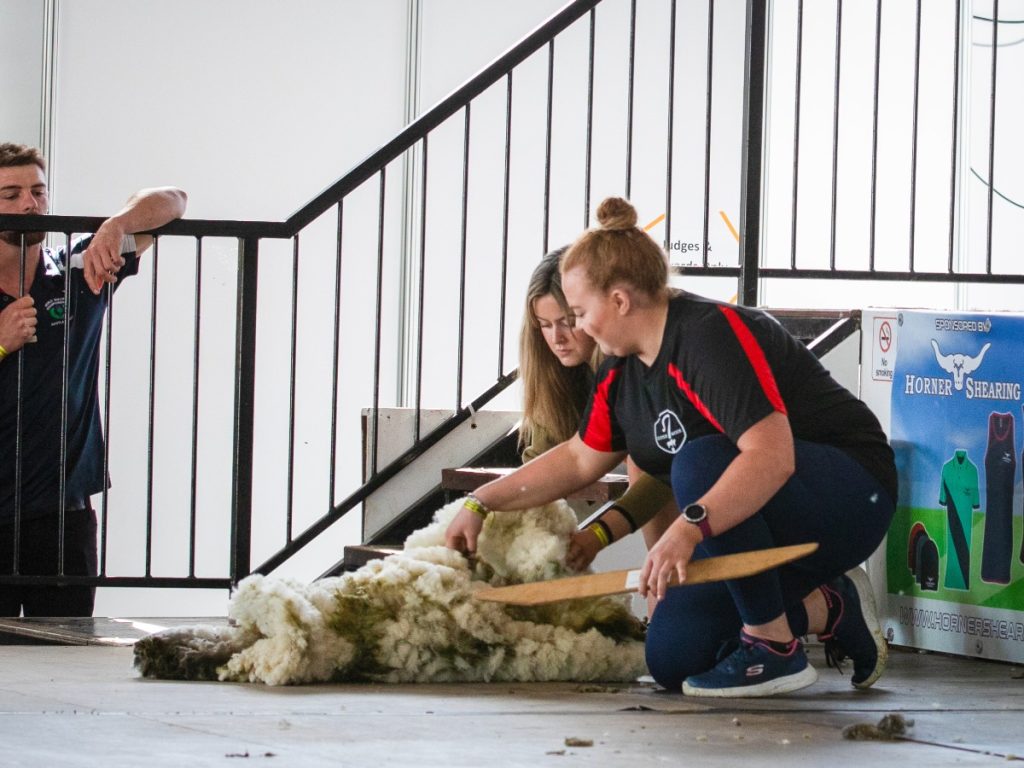
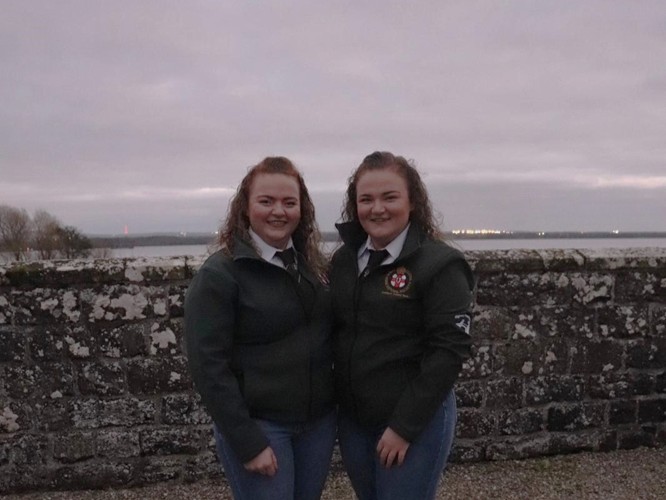
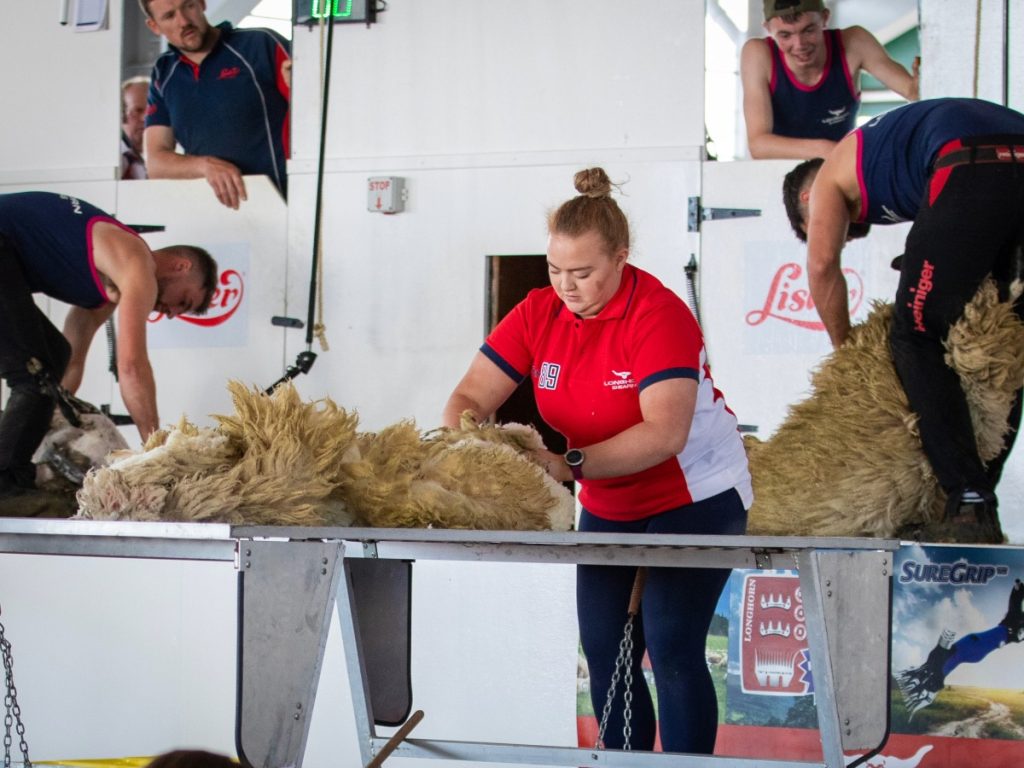
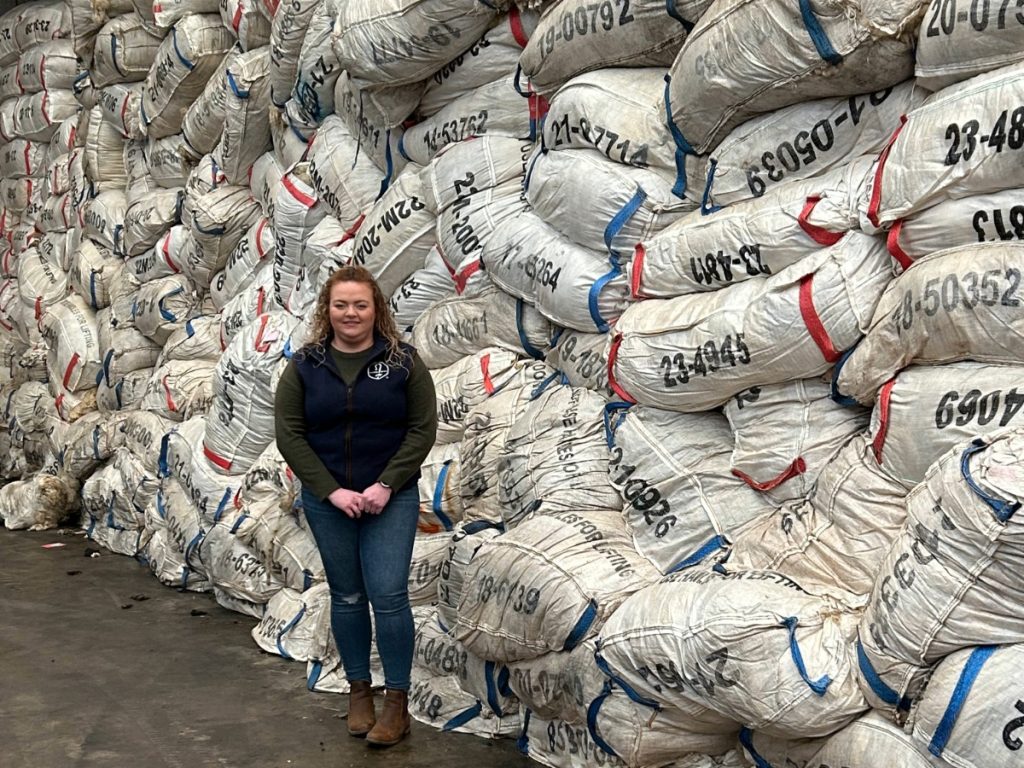
Growing up on a family estate surrounded by sheep, Rachel Murphy has been immersed in the world of farming and wool from an early age. While her father worked as a shearer. So she discovered her own passion in Wool Handling – a path that has led to national representation and advocacy for Ulster wool. With four consecutive appearances for Northern Ireland at the World Championships. Rachel combines dedication, skill, and a deep connection to the farming community. Beyond the competition arena, she champions sustainable, local wool, helping bridge the gap between farmers and consumers while highlighting the versatility and value of this natural fibre.
Can you tell us about your background in farming and the wool industry?
My dad works on an estate running around 1,000 ewes. And I grew up there, so sheep have always been part of my life. I help out with lambing, shearing and wool handling and have done from a young age, so it’s something I’ve always been around.
Dad was a shearer, but I never fancied picking up the handpiece myself. So I went down the wool handling route instead – and that’s where I found my place.
How many times have you represented Northern Ireland in the World Champs?
This will be my fourth time in succession representing Northern Ireland at the World Championships, which is something I’m incredibly proud of.
To pull on the Northern Ireland jersey once is special, but to do it four times running really means a lot. It takes a huge amount of commitment, training and support from those around you, so I never take the opportunity for granted. It’s always an honour to represent home on that stage.
What’s your preparation for the World Champs?
My preparation for the World Championships starts with keeping myself fit. I go to the gym regularly to make sure I’m strong and ready for the physical side of it. Wool handling is demanding, so fitness makes a big difference.
I’ll be travelling over in February and will spend time working alongside my sister, Ellen, while I’m there, which is great preparation in itself. If there are any competitions happening while I’m over, I’ll definitely look into entering them.
How does it feel representing Northern Ireland on the World stage?
It’s even more special this time as it’ll be the first time both Ellen and I will be competing together at a World Championships. That means a lot to us.
I’m sure there’ll be a bit of sibling rivalry thrown in – there always is – but it’s all in good spirit. At the end of the day, we’re both proud to be representing Northern Ireland and supporting each other along the way.
How did you first become involved with Ulster Wool, and what led to you becoming an ambassador?
I first became involved with Ulster Wool through helping out at the Balmoral Show, mainly with the wool handling and packing. It was a great way to get stuck in and be part of it all.
Jayne Harkness-Bones was a big inspiration to me and really encouraged me to step into the competition side of things. Having that support and belief made a big difference, and it naturally led to me becoming more involved and eventually taking on the role of ambassador.
From your perspective, what makes Ulster wool (fibre) special and worth championing?
From my point of view, Ulster wool is special because it’s a completely natural product. It’s sustainable, renewable and something we’re producing right here at home, which is important.
It’s also incredibly versatile. There are so many different products it can be used for, from insulation to clothing and beyond. I think that’s something worth shouting about, especially at a time when people are looking for more environmentally friendly options.
We held the Muckamore open evening last year – why do you feel these events are important for both farmers and the public?
The Muckamore open evening were really worthwhile. They give farmers the chance to see exactly what happens to their wool once it leaves the yard. From how it’s graded and the different types and qualities. I think that understanding the process helps everyone see the bigger picture.
They’re also important for the public. It gives consumers a better idea of where wool actually comes from and the work that goes in behind the scenes. That connection between farm and product is something we shouldn’t lose.
How can farmers make the most of our services and support?
Farmers can really make the most of our services by working together and bringing their wool through one main outlet. By pooling it together, it gives strength in numbers and helps ensure the wool is marketed properly and sold at a competitive price.
It also means the grading is done professionally and consistently. Which helps protect the reputation of our product. The more we work together and back the system in place, the stronger the industry will be for everyone involved.
What’s the most rewarding part of being an ambassador?
The most rewarding part of being an ambassador is getting out and speaking to farmers about Ulster Wool and what we’re trying to achieve. It’s good to have those honest conversations and hear directly what’s on people’s minds.
I also really value working alongside the other ambassadors. There’s a great community spirit between us. We’re able to share opinions and talk through the different queries we’re all getting. That way, we can feed things back properly and make sure farmers feel heard and supported.
In three words, how would you sum up Ulster Wool?
Supportive, Guidance, Valuable
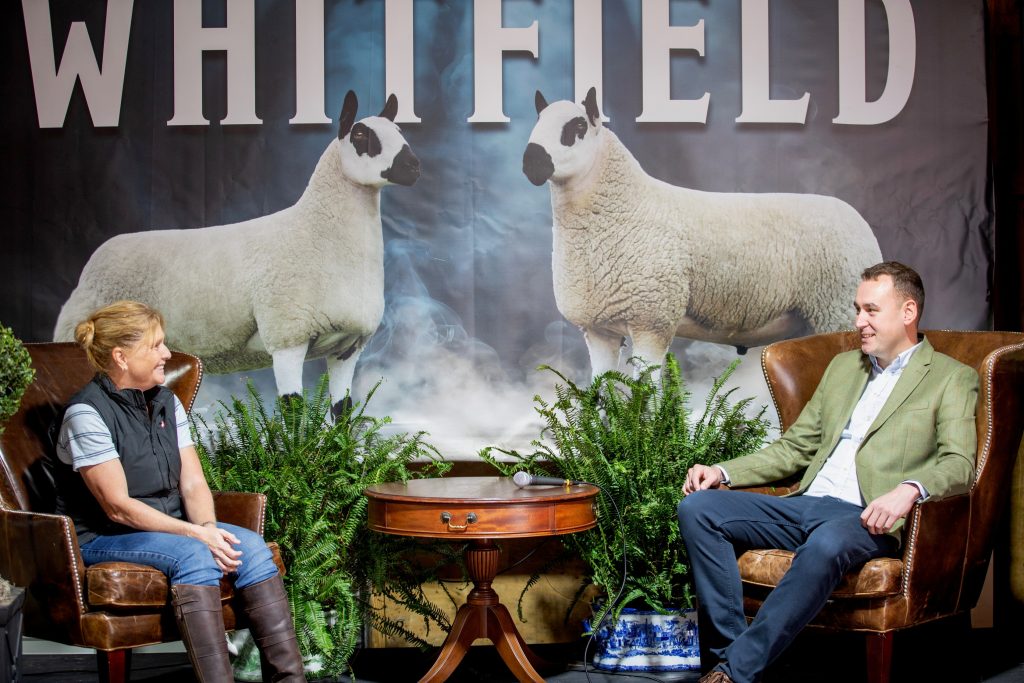
Q&A with Chris Adamson, NSA
Can you share a bit about your background and how you’re involved in the wool industry?
My involvement in the wool and sheep industry goes back to my childhood. I was introduced to sheep farming through my grandad which led me to building up my own flock and becoming deeply interested in the wider sheep sector. Wool has always been part of that journey. As a breeder I have always tried to promote the value of wool and the important role it plays in the identity and sustainability of our native breeds.
Alongside my own flock I work for the National Sheep Association as the North of England Manager. This gives me the opportunity to work closely with a wide range of breed societies and represent the interests of sheep farmers across the region. Through that role I regularly work with Ulster Wool and support the messages we both share around the value of UK wool, the importance of quality and the need to champion our national flock. That combination of practical experience and industry involvement has shaped the way I look at wool production both at home and internationally.
What inspired your trip to the USA, and what were your main goals for going?
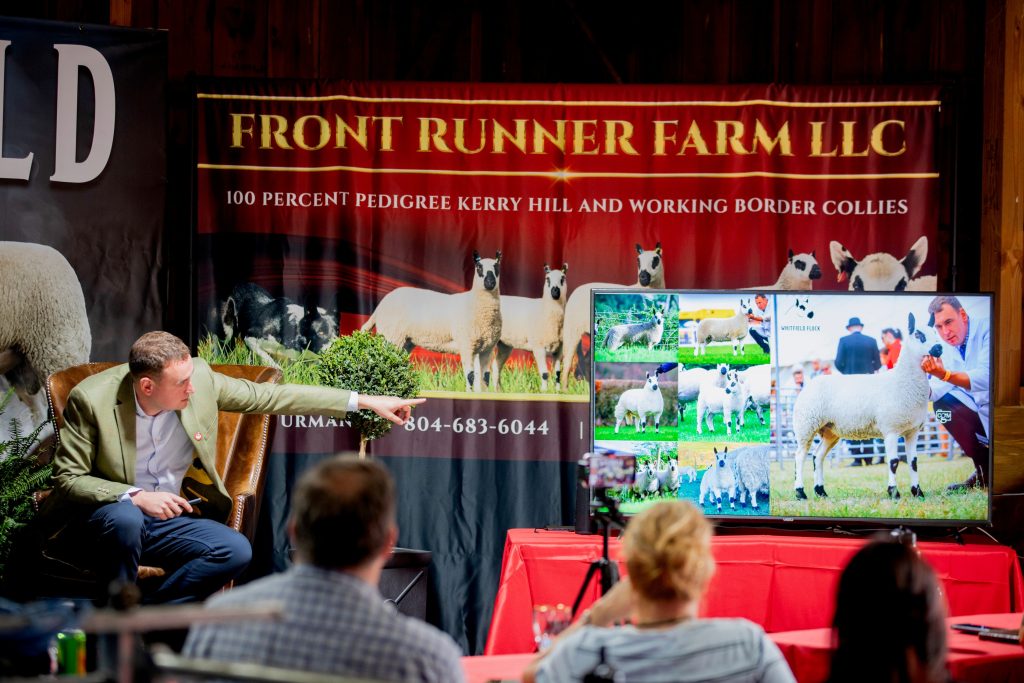
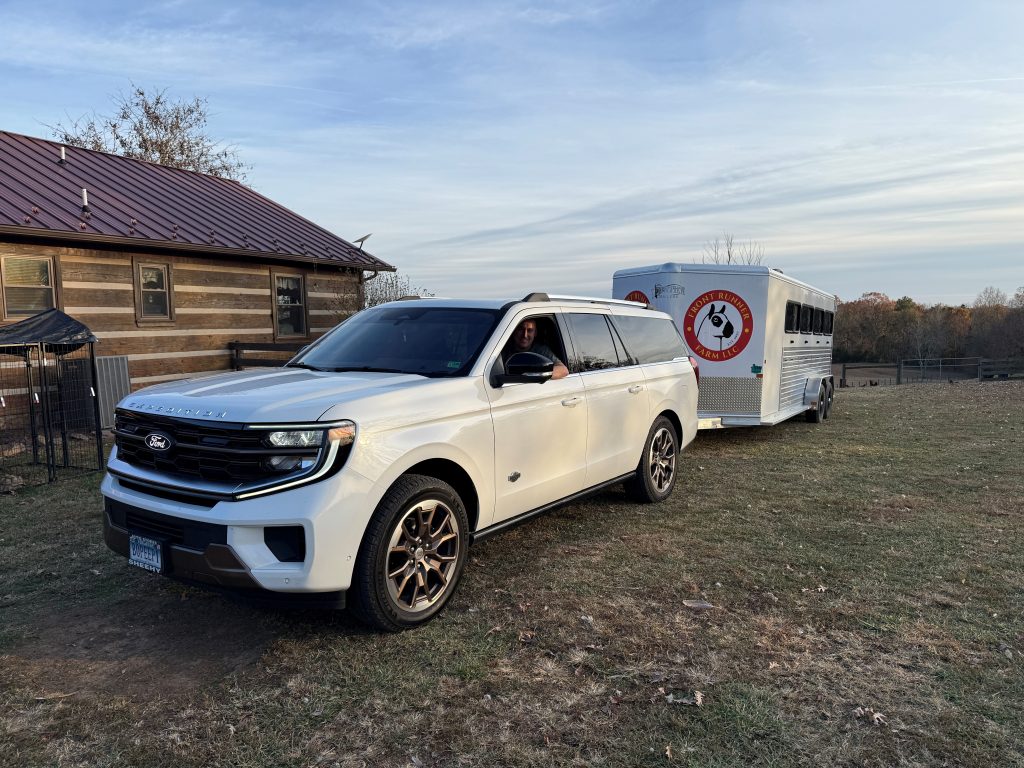
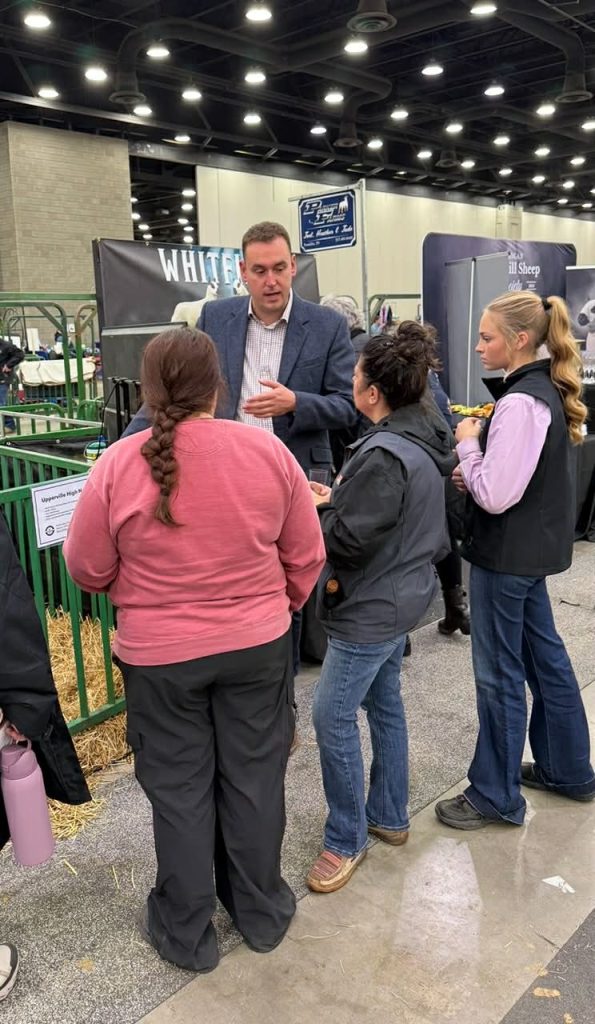
I was invited by the American Kerry Hill Sheep Society to speak at their members workshop and to attend there first show at NAILE. Over the past few years, I have exported most of the embryos and semen that have entered the country since the lift of the ban which has put me in a unique position to support their breeders as they establish the breed. The Society asked me to share my knowledge not just of the Kerry Hill but of the UK sheep industry as a whole and how a breed can be developed responsibly from the outset.
I was also asked to judge the first Kerry Hill show at the North American International Livestock Exposition. I declined judging as I felt my time would be better spent supporting the breeders on the ground, helping them prepare their sheep, trimming
and giving them reassurance as they entered their first major show. My main goal was to help the Society make a strong and united first impression, pass on what I have learnt through my work in the UK and give the breeders confidence as they take the breed forward.
How would you describe your experience while you were in the USA?
The experience was fantastic from start to finish. The enthusiasm and passion from the American breeders were incredible to see. Spending time with members, visiting farms and getting to know their systems was a real privilege and it showed just how committed they are to shaping the breed in the right way.
It was also fascinating to see the wider sheep industry in the USA and how different many of their breeds look compared to the UK despite sharing the same breed names. Their show ring style is very distinct. Sheep are generally shown much taller with a very upright head carriage and a strong emphasis on stature. Many breeds are shown fully shorn apart from the legs with very little wool on display. Even where sheep are shown in wool the fleece is heavily trimmed rather than presented in what we would call a full fleece here.
From a wool point of view the interest in the Kerry Hill fleece was one of the first things breeders commented on which was encouraging to hear.
At the start of my trip, I met William Surman, the agriculture, food and drink attaché at the British Embassy. Speaking with him was extremely insightful. The USA has around five million sheep compared with our thirty-one million yet its population is roughly forty times larger. It was interesting to hear that domestic consumption in the USA is driven largely by ethnic communities which is very similar to the situation here. William was instrumental in reopening the border to British lamb and ovine germplasm in 2023 after thirty-five years of restrictions. Interestingly the majority of trade so far has been in genetics rather than meat which demonstrates how highly valued UK breeds are overseas.
What key takeaways or positives did you bring back from the trip?
Whenever I travel abroad, I find it interesting to look at how agriculture operates in different countries. I would not say there is anything I will be changing within my own flock or system but that does not mean what they do in the USA is wrong. Their breeding goals are simply different and reflect what their market demands.
The biggest positive for me was seeing how much interest there is in UK breeds. It highlights the strength of our national flock, and the trust other countries place in UK genetics. With the relaxation of import rules for germplasm the United States now has a real opportunity to once again draw on high quality UK bloodlines. The process is still lengthy, expensive and demanding but it is encouraging to see UK breeds being imported again and making an impact.
Another key takeaway was the unity within the American Kerry Hill Society. They have worked incredibly hard to start the breed on the right footing and the passion from members was clear to see. They’re first showing at NAILE was a huge success and seeing the ring packed shoulder to shoulder proved that they made an impression on the wider sheep industry.
How do you see your experience influencing your work in the wool industry moving forward?
My trip reinforced the importance of protecting breed identity and the value of maintaining strong wool characteristics even when breeding sheep for different markets. Seeing how other countries present and select sheep makes you reflect on the strengths we have here in the UK especially around fleece quality, traditional breed type and the rolewool plays in defining our breeds.
It also reminded me how highly UK genetics and UK wool are regarded overseas. That is something we should be proud of and continue to promote. Although I have only covered the trip briefly in this report, I hope it has given you an insight into my experience. I would strongly encourage everyone to get off the farm and explore what is happening beyond their own gate. Whether that is visiting other farms, attending events or going to shows within the UK it is always valuable to see what others are doing and to think about what you might bring back home.
The trip has strengthened my belief that the UK continues to play a major role on the global stage and sheep breeding and wool remains a key part of our national story. It has given me fresh energy to continue championing our industry both at home and on the international stage.
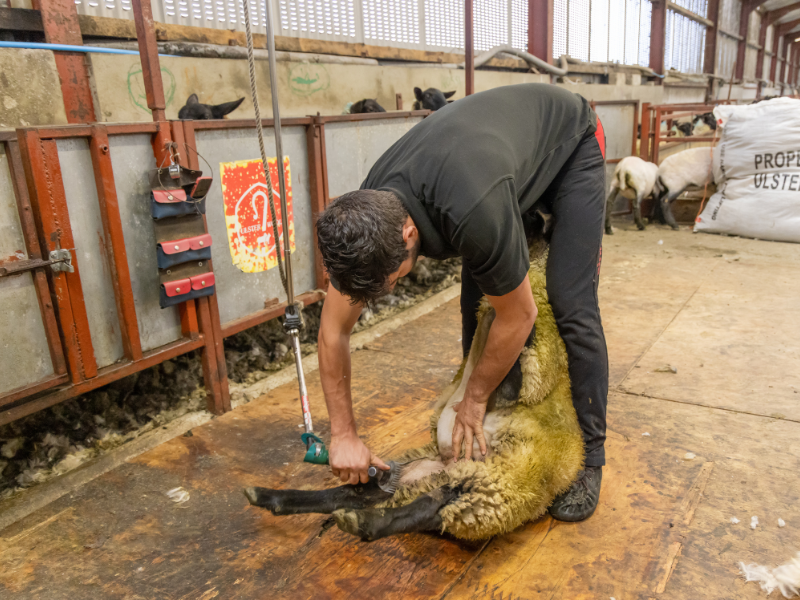
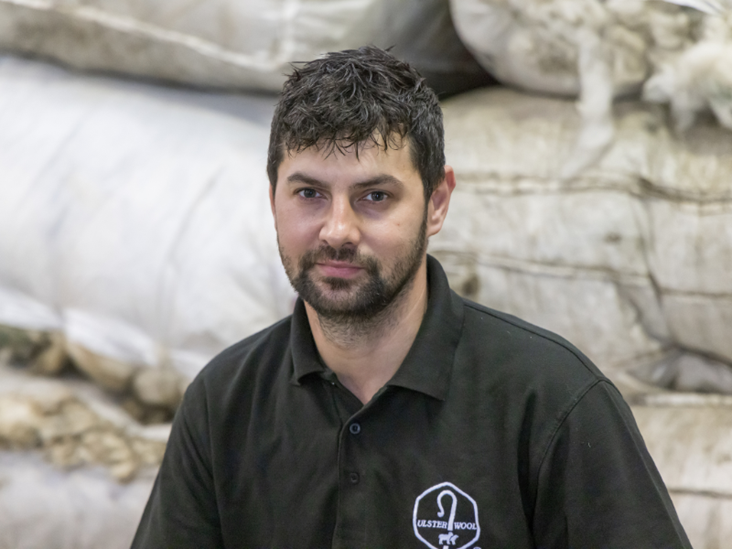
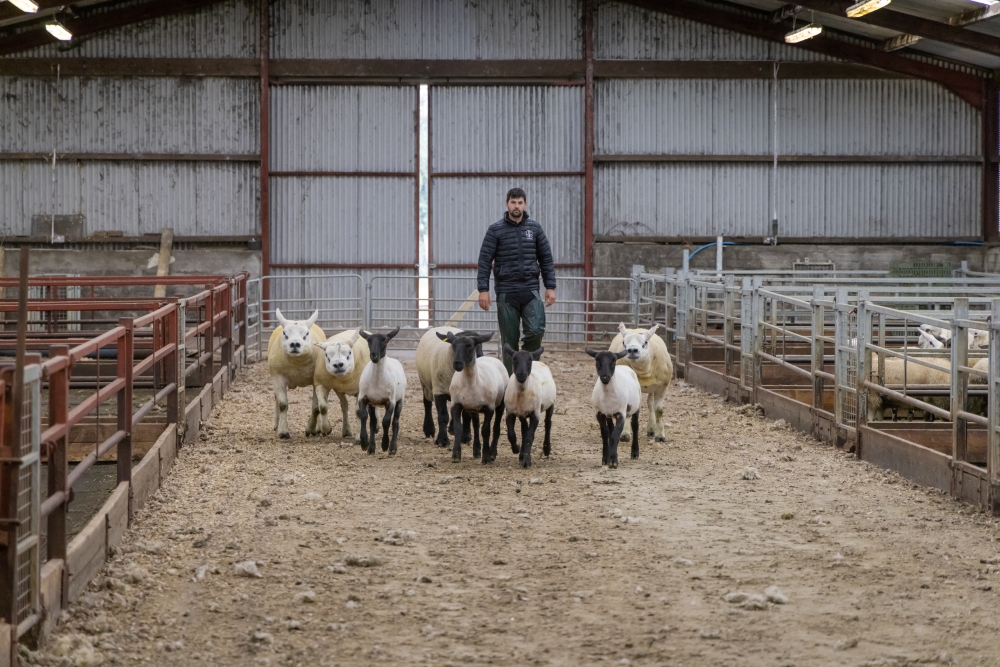
Q&A with Jack Robinson, Ambassador
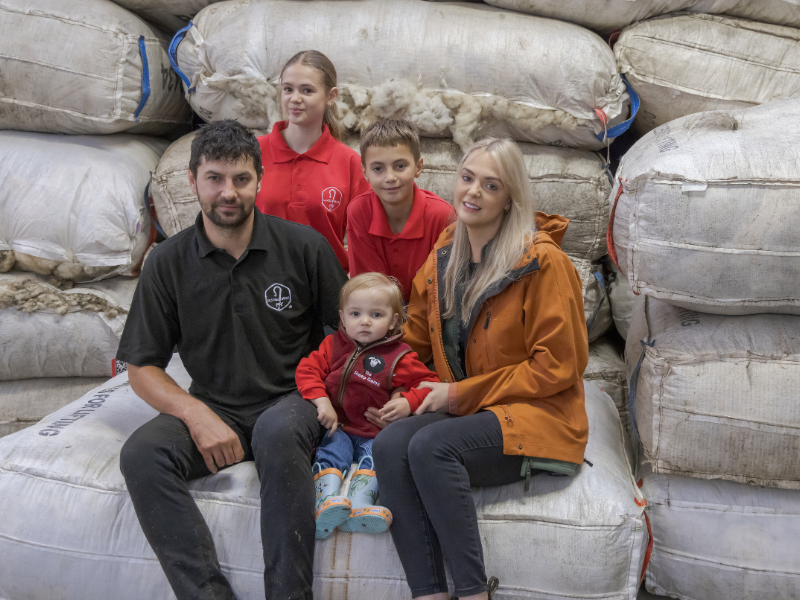
With a strong background in sheep farming and an impressive record within the shearing industry. Jack Robinson brings passion, experience and first-hand knowledge to his role as an Ambassador. Balancing a busy farming enterprise with an outstanding competitive shearing career. Jack has developed a deep understanding of the wool sector and the challenges and opportunities it faces today. In this Q&A, Jack shares insights into his farming life, his journey within the wool industry, and why he is committed to championing Ulster Wool and supporting fellow farmers.
Can you tell us about your background in farming and the wool industry?
I farm on my own holding, running around 800 breeding ewes along with 150 dry hogg lambs. Over the winter I also store-finish, buying in roughly 500 store lambs and finishing them intensively indoors. I got involved in the wool industry at 17, when I completed an Ulster Wool shearing course and learned to shear. Since then, I’ve travelled to New Zealand seven times, competing in many competitions, and I’ve won the national title 12 times.
How did you first become involved with Ulster Wool, and what led to you becoming an ambassador?
The main reason I got involved is because of the support I’ve had throughout my shearing career, from sponsorship to learning the skill through the courses provided. I wanted to give something back to the industry, and when the opportunity came up to become an Ambassador, I grabbed it with both hands.
What does your role as Ambassador involve on a day-to-day basis?
My role involves day-to-day work in local markets, chatting with farmers. I also run a collection centre and help with buying wool. I spend time advising younger shearers on how to get onto courses, and if anyone has questions, I’ll always point them in the right direction.
From your perspective, what makes Ulster wool (fibre) special and worth championing?
It’s a natural product, and in this day and age, instead of using oil-based fibres, it’s a no-brainer. Sheep grow it every year and they have to be shorn for welfare reasons, so it shouldn’t be going to waste.
What do you see as the biggest challenges currently facing our industry?
The decline in sheep numbers is a real challenge. There are fewer young farmers coming into sheep farming, and more land is going into environmental schemes and tree planting.
Are there particular opportunities you’re excited about for the future of Ulster wool (fibre)?
Looking ahead, I think wool as a fibre will become more valuable and be used more efficiently. I’ll also be investing in wool carpets and bedding, doing my bit to put something back into the industry.
We held the Muckamore open days last year – why do you feel these events are important for both farmers and the public?
The events are important because you’re the face of Ulster Wool and you get to meet farmers face to face. While also giving them a chance to see what goes on behind the scenes. It shows how hard the grading teams work and how the depot operates. People often think the process is simple, from A to B, but there’s a lot of handling and work involved that most don’t see or understand.
How can farmers make the most of our services and support?
Farmers can make the most of the service by using the collection centres we have now more than ever. Farmers can also work together to fill a container, which will then be collected. When delivering to a collection centre, a QR code is displayed for farmers to scan, confirming delivery of their wool so payment can be released.
What’s the most rewarding part of being an ambassador?
The most rewarding part is being a respected representative and knowing people see that you’re involved and trying to do your bit. As a local farmer, I’m keen to support and raise the profile of wool.
Do you have a favourite memory or proudest moment during your time with Ulster Wool?
The NSA event at Alwyn’s farm this year was really good. As Ambassadors, Rachel and I were asked to do a demonstration – I did the shearing and Rachel covered the wool handling. A lot of local farmers came over to watch and were very attentive. The feedback afterwards, through word of mouth, was that people thought we were one of the best stands at the show.
In three words, how would you sum up Ulster Wool?
Helpful, Community, Hardworking